BASI guide: how to bleed your radiators
Originally published 12 January 2017. Prices have since changed - see our current boiler service page.
Bleeding your radiators is necessary for keeping your heating running efficiently. Check your radiators at least once a year to see if they need bleeding. Air trapped in your radiators causes cold spots that make your central heating less efficient, costing you more.
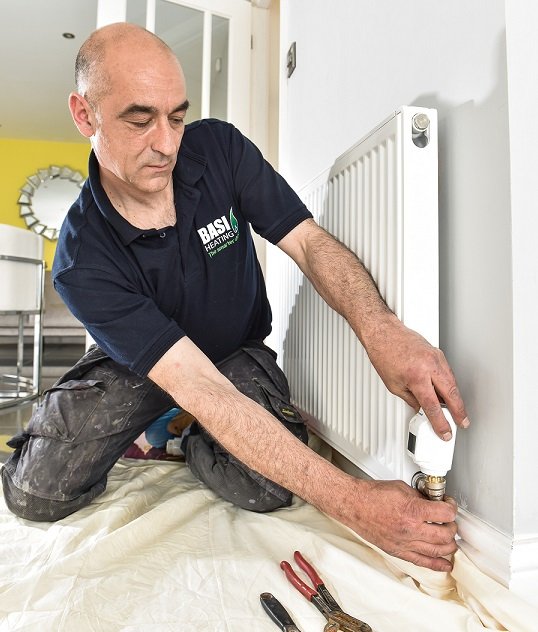
Step 1: Turn your heating on
When all radiators have warmed up, gently test the temperature all over each one to check for cold patches, taking care not to burn yourself.
Step 2: Pinpoint which radiators need bleeding
Any radiators with cold patches need to be bled. Note them down as you test.
Step 3: Turn off your heating
Wait for the radiators to cool down so you can handle them safely.
Step 4: Find the valve at the top of the radiator
Position a cloth just under the valve to catch drips, then loosen the valve with a radiator key or flat blade screwdriver. Released air makes a hissing or whistling noise. Keep going until all the air is out.
Step 5: Be ready to reseal the valve quickly
Once the air is gone, water starts pouring or spurting out, so retighten the valve quickly as soon as this happens.
Step 6: Check your pressure
After bleeding all radiators, check the water pressure. It should be between 1 and 2. If it is lower, adjust it using the pressure valve.
If you would like professional advice, our friendly engineers can arrange a central heating service at a convenient time. See also our guide on the correct boiler pressure.