Air conditioning is not just for summer
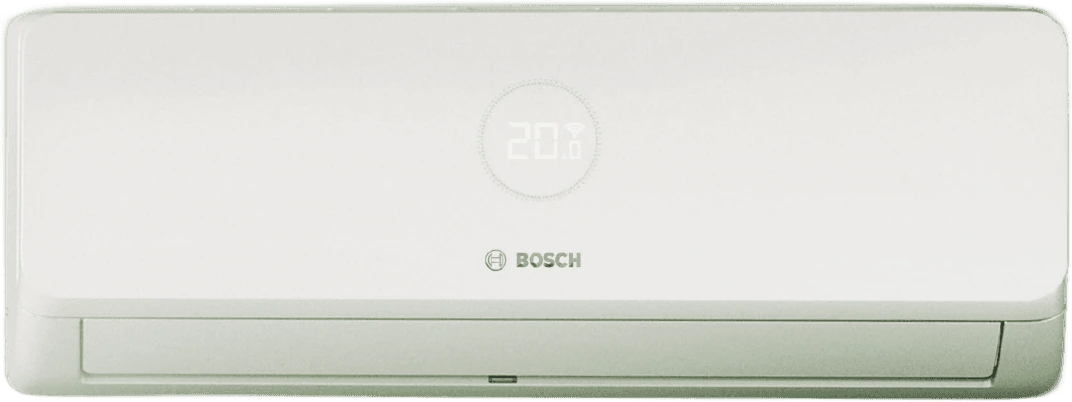
Ask most people in Yorkshire what air conditioning is for and they will say the three hot weeks in July. That was true of the units fitted twenty years ago. It is not true of the one we fit now. The Worcester Bosch Climate 3200i is an air-to-air heat pump, and the same box that cools a bedroom in a heatwave will heat it on a frosty January morning, dry out the air that causes condensation, and filter out the dust and mould spores that make winter colds and asthma worse.
If you have a room in your house that is always cold, always damp, or has black spots creeping up the corner of the ceiling, this article is for you.
It heats as well as it cools
A heat pump does not make heat, it moves it. In summer the Climate 3200i takes heat out of the room and pushes it outside. In winter it reverses and pulls heat from the outside air into the room, even when it is cold out. Bosch rates the unit A++ for cooling and A+ for heating, and A+ on the heating label means at least four units of heat for every unit of electricity it draws. A plug-in fan heater or oil radiator gives you one for one.
That is why the running cost comparison is not close. Heating one bedroom with a 2 kW electric heater for six hours costs the same electricity as running the heat pump unit for the best part of a day. And because it only heats the room it is in, you are not firing the boiler and every radiator in the house to warm the one room that is actually being used.
Bosch publishes the unit’s heating performance down to minus 10 outside on its data sheet, which covers all but a handful of Yorkshire nights. The same technology, scaled up, heats whole homes as an air source heat pump.
Why cold rooms grow mould
Condensation is simple physics. Warm air holds moisture. Everyday life puts a surprising amount of it into a house: cooking, showers, drying washing on radiators, even breathing. When that moist air touches a surface that is cold enough, the water comes out of the air and settles on it. Give that damp surface a few weeks and mould grows.
So mould needs two things: damp air and a cold surface. Yorkshire houses supply both. Stone terraces in Halifax, Haworth and Keighley and the Victorian brick streets of Bradford and Leeds have solid walls with no cavity, so an external wall in a north-facing bedroom stays cold all winter. Add a room that is heated for an hour in the morning and left to drop all day, and you have the classic pattern: black mould behind the wardrobe, streaming windows, a musty smell.
The government’s own guidance on damp and mould, updated in April 2026, says homes that are insufficiently heated and insulated are more prone to moisture and condensation building up on the inside of external walls and windows, and lists improving ventilation, energy efficiency and inadequate heating as the ways to address it.
How one wall unit changes that
An air conditioning unit in heating mode works on both of mould’s requirements at once.
It keeps the surfaces warm. Rather than a blast of heat in the morning and a cold room by lunchtime, the unit holds the room at a steady temperature on its timer. Walls and glass stay above the point where moisture condenses, so the water stays in the air instead of on your wallpaper.
It takes the water out of the air. The Climate 3200i has a dry mode. Air passes over a cold coil inside the unit, the moisture condenses on the coil instead of your window, and it drains away outside. On a wet November day with washing drying indoors, that is the difference between a bedroom at 70 per cent humidity and one at 50. Most guidance puts comfortable indoor humidity between 40 and 60 per cent, which is also the range where mould struggles to grow.
It cleans what you breathe. Bosch’s figures for the unit’s purifying filter say it removes up to 95 per cent of dust particles, smoke odours and pollen, and it has a double filter system with an ioniser to reduce allergens. Mould reproduces by releasing spores into the air; pulling them out of circulation is part of why people with asthma notice the difference.
What it will not do is fix a building fault. If water is coming in through a roof, a failed damp-proof course or a cracked gutter, or the bathroom extractor fan has not worked since 2019, the answer is to fix that first. We survey the room before we quote and if that is what we find, we will say so.
The health case
This is not just about tidy wallpaper. The government guidance is blunt about it: damp and mould predominantly affect the airways and lungs, and their respiratory effects can cause serious illness. It estimates that in 2019 damp and mould in English homes were associated with around 5,000 cases of asthma and 8,500 lower respiratory infections among children and adults. It also lists eye irritation, eczema and other skin rashes, and the effect on mental health of living with a problem you cannot get rid of.
Children, older adults and anyone with an existing health condition are at greater risk. If the cold, damp room in your house is a child’s bedroom or where an elderly parent sleeps, that is the room to deal with first.
Landlords have an extra reason. Awaab’s Law, in force for social landlords since October 2025, sets fixed deadlines for investigating and fixing damp and mould, and the Renters’ Rights legislation is extending similar duties to the private sector. A heat-and-dry unit in the problem room is a permanent fix that does not depend on a tenant’s heating habits.
Rooms we are asked about most
Across our patch the same rooms come up again and again:
- Loft conversions in Leeds and Harrogate that roast in August and freeze in February because the radiator run was an afterthought.
- Extensions and garden rooms used as offices, where you want heat from eight until five without running the whole house.
- Bedrooms over a garage or passage in Bradford, Wakefield and Pontefract semis, with a cold floor and a cold outside wall.
- North-facing rooms in stone houses in Halifax, Huddersfield, Skipton and the Worth Valley, where the wall itself is the cold surface and the mould comes back every winter however often it is wiped off.
- Shops, salons and small offices where staff and customers need the same room to be comfortable in both seasons.
One unit, one wall, one outside box. A standard install is done in a day by an employed BASI engineer, not a sub-contractor.
Cleaner, quieter, and on your phone
The 3200i runs quietly enough to sleep next to, and you control it from the Bosch HomeCom Easy app or with Alexa, Google Home and Apple Home. Set the bedroom to warm up before you go up, set dry mode to run while the washing is on the airer, and set the office to be at temperature when you sit down. A Save Mode and weekly timer mean you are only paying to condition the room when someone is in it.
What it costs
Two supplied-and-fitted packages, both with a 5-year guarantee:
- One room from £1,495 inc VAT, or about £20 a month on finance.
- Two rooms from £2,895 inc VAT, or about £39 a month.
Those are fixed prices for a standard install. For three rooms or a business premises we survey the space and quote one fixed price before any work starts. The full spec and the packages are on our air conditioning page, and the summer side of the argument is in is air conditioning worth it for a Yorkshire home?
If the problem is the whole house rather than one room, the fix might be insulation, a heat pump or simply a boiler that is working properly, and we will tell you straight. Our guide to how to tell if your house is well insulated is a good place to start.
Common questions
Does air conditioning heat a room as well as cool it? Yes, if it is a heat pump unit. The Climate 3200i runs in both directions and is rated A+ for heating, which means around four units of heat for every unit of electricity it uses, against one for one from a plug-in heater.
Can air conditioning stop condensation and mould? It tackles the two things mould needs, cold surfaces and damp air, by holding the room at a steady temperature and pulling water out of the air in dry mode. It will not cure a leak, rising damp or a broken extractor fan, and we will tell you if that is the real problem.
Is it expensive to run in winter? No. A heat pump moves heat rather than making it, so one room costs far less to warm than with an electric heater, and you are not firing the whole central heating system for a single cold room.
Which rooms benefit most? Loft conversions, extensions, garden offices, bedrooms over a garage, and north-facing rooms in stone or solid-wall houses where the walls stay cold.
How much does it cost to install? £1,495 inc VAT for one room and £2,895 inc VAT for two, supplied and fitted with a 5-year guarantee, fixed after a free survey. Finance from around £20 a month.
Which areas do you cover? West and North Yorkshire, including Bradford, Leeds, Wakefield, Halifax, Huddersfield, Harrogate, Keighley, Skipton, Pontefract, Castleford, Brighouse, Otley and Haworth.
Got a room like this? Tell us about it and we will give you a fixed price, or spread the cost with our finance options.