Worcester Bosch fault codes, explained
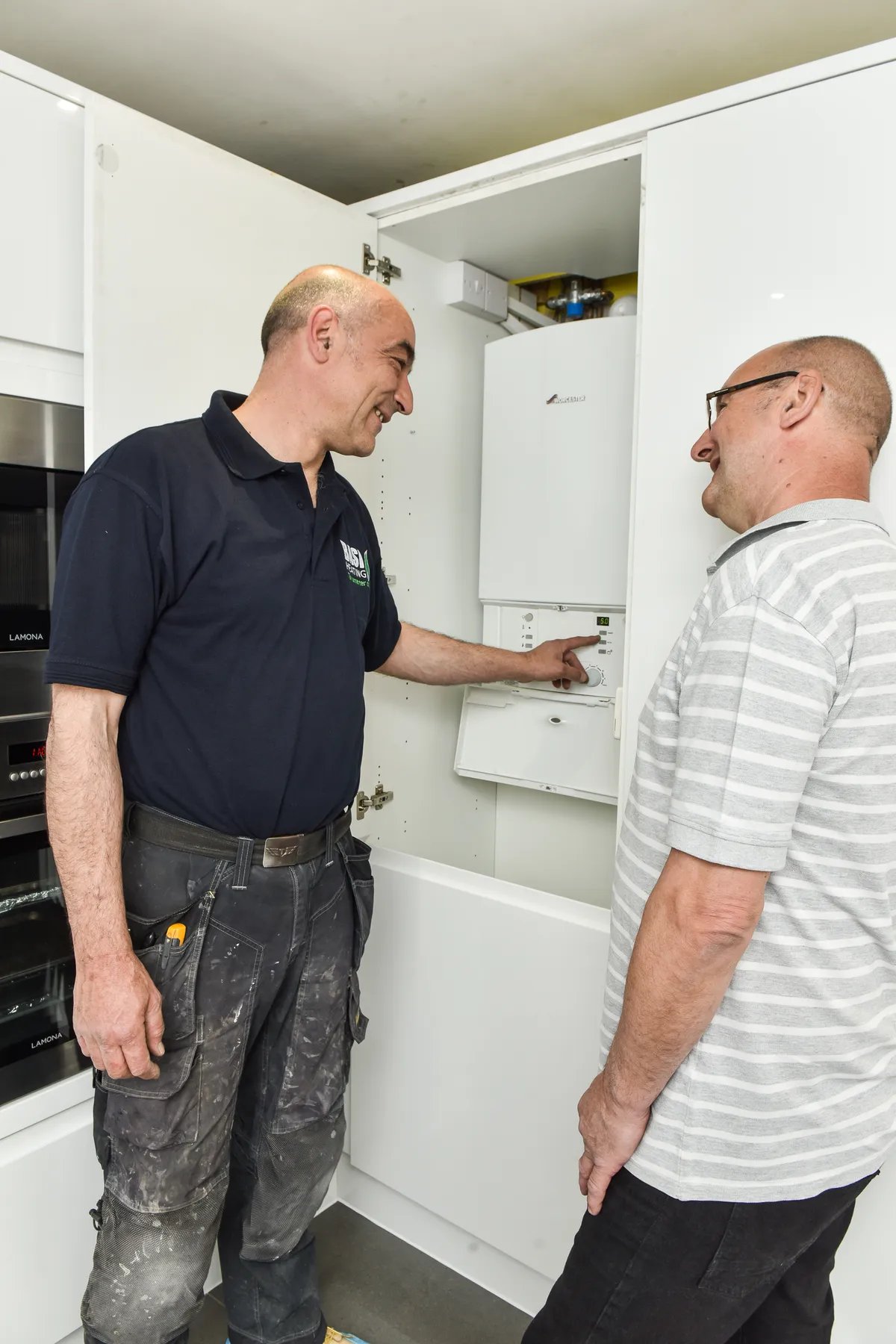
Worcester Bosch boilers display a fault code when something stops them running safely. Most codes fall into a handful of categories: ignition failure, low pressure, overheating, a sensor reading out of range, or a component that has stopped working. Knowing which category your code belongs to tells you whether you can clear it yourself or whether you need a Gas Safe engineer on the doorstep.
This guide covers the fault codes we see most often on Greenstar, CDi, Si, and i range boilers. The table below gives a plain-English translation. The safety notes below that tell you what you can and cannot do yourself.
Quick-reference table
| Code | What it means | What to do |
|---|---|---|
| EA / 227 | Ignition lockout. The boiler tried to light but could not detect a flame after three attempts. Causes include a gas supply issue, a faulty ignition electrode, a dirty flame sensor, or a frozen condensate pipe in cold weather. | Check that other gas appliances (hob, fire) are working. If the condensate pipe is frozen, thaw it with warm water. Try one reset. If the code returns, call a Gas Safe engineer. |
| E9 | Overheat protection has tripped. The boiler detected water temperature climbing too high and shut down for safety. Common causes: low system pressure, air trapped in the system, a sluggish pump, or a blocked heat exchanger. | Check the pressure gauge. If it is below 1 bar, repressurise via the filling loop. Try one reset. If the code comes back, do not keep resetting. Call an engineer. |
| A1 | Pump fault or low water pressure. The pump may be stuck or running dry, or pressure has dropped below the minimum threshold. | Check the pressure gauge (should be 1 to 1.5 bar when cold). If low, repressurise. Bleed radiators if you suspect air in the system. If pressure is fine and the code persists, the pump likely needs inspection by an engineer. |
| C7 | Fan not running on start-up. The boiler checks the fan before it fires; if it does not see the fan reach the correct speed, it shuts down. Possible causes: fan failure, wiring fault, air pressure switch fault, or a blocked flue. | This is an engineer-only repair. Do not attempt to reset repeatedly. Book a Gas Safe engineer. |
| C6 | Fan speed too low or outside the expected range during operation. Similar causes to C7. | Engineer-only. |
| D1 | Flow temperature sensor fault. The sensor is reading outside its expected range, which may mean a faulty sensor, wiring damage, or a circulation problem causing erratic temperature swings. | One reset is worth trying. If the code reappears, an engineer is needed to test or replace the sensor. |
| D4 | Primary flow temperature rising faster than expected. Often points to restricted water circulation: air locks, a partially closed valve, or sludge build-up in the heat exchanger. | Do not keep resetting. An engineer should investigate the cause, which may include a powerflush if there is significant sludge. |
| F0 | Internal electronic fault. Usually the PCB (control board) or gas valve electronics. | Engineer-only. Do not reset repeatedly. |
| F7 | Flame detected when the burner should be off. The boiler has seen a false flame signal after shutdown, which may indicate a faulty flame sensor, sticking gas valve, or moisture in the electronics. | Do NOT reset this one. Turn the boiler off and call a Gas Safe engineer promptly. |
| FA | Flame still detected after the gas valve has closed. Similar safety concern to F7. | Do NOT reset. Call an engineer. |
| 9U / 9A | Heat control module or code plug error. The boiler cannot read its configuration correctly. Usually a code plug issue or PCB fault. | Engineer-only. |
| A7 | Hot water NTC thermistor (temperature sensor) fault. Affects hot water output. | One reset is reasonable. If it returns, an engineer will need to test or replace the sensor. |
| FD | Power interruption recorded. Often a one-off after a power cut. | Reset the boiler. If it runs normally and the code does not return, no further action is needed. |
Before you reset: a safety note
Resetting a boiler once after a fault is reasonable. The boiler will try to restart and, if the fault was a one-off glitch, it should clear. What you should not do is reset repeatedly in the hope that the problem goes away. Modern boilers lock out for a reason: they have detected something that could cause a bigger failure or a safety risk if the boiler keeps firing.
If a fault code returns within an hour of resetting, stop resetting and book an engineer.
If you can smell gas at any point, do not touch the boiler at all. Leave the house, leave the door open behind you, and call the National Gas Emergency number: 0800 111 999. This line is free and open 24 hours a day.
Carbon monoxide has no smell. If you have a CO alarm sounding alongside a boiler fault, treat it as an emergency. Open windows and get outside. Call 0800 111 999.
What homeowners can safely do
A few fault codes give you a straightforward action to try before calling anyone:
- Recheck pressure. If the gauge reads below 1 bar, use the filling loop to bring it back to 1 to 1.5 bar. Your boiler’s user manual shows where the filling loop is and how to use it. Top up slowly and stop at 1.5 bar.
- Bleed a radiator. Air in the system can cause circulation problems that trigger E9 and A1 faults. Bleeding the highest radiator in the house releases trapped air.
- Thaw a frozen condensate pipe. In cold weather, EA / 227 codes are often caused by a frozen condensate pipe rather than a gas or ignition fault. The pipe is usually a white plastic pipe running outside at low level. Pour warm (not boiling) water along it, then reset the boiler. Our winter boiler breakdown guide covers thawing it step by step, along with the three other checks that fix most cold-weather lockouts.
- Check gas supply. Try another gas appliance. If the hob will not light either, the fault is upstream of the boiler. Call your gas supplier.
- One reset. For most codes, one reset is safe. Hold the reset button for the specified time (typically 3 seconds on Greenstar models) and give the boiler two minutes to attempt a restart.
Everything beyond these steps involves the boiler internals or the gas supply. Those are jobs for a Gas Safe registered engineer.
Time to call an engineer
Common questions about Worcester Bosch fault codes
How much does it cost to fix a Worcester Bosch fault?
£80 for the first hour of repair labour plus any parts at trade price. Because BASI is Worcester Bosch accredited we carry the regular Greenstar parts (gas valves, fans, expansion vessels, sensors, PCBs) on the van, so most faults are diagnosed and fixed in a single visit. The diagnosis fee is also £80, the same as the first hour, and it counts towards the repair if you go ahead. No separate call-out fee.
Can I reset my Worcester Greenstar myself?
Yes, but only once. Worcester boilers lock out after repeated reset attempts and you will need an engineer to clear them. If the code returns after one reset, the cause needs diagnosing, not resetting.
How quickly can BASI come out for a same-day Worcester Bosch repair?
Same-day where we can across BD, LS, WF, HD, HX and HG postcodes when you call in the morning. Otherwise next-day. Out-of-hours emergency cover is by phone on 0800 980 6018.
Will an annual service prevent Worcester Bosch fault codes?
Often, yes — and Worcester Bosch requires an annual service to keep the manufacturer warranty valid (up to 10 years on accredited installs). Common codes like EA 227 (no flame), A1 (pump), C7 (fan) and D1 (sensor) become more likely as the boiler ages and the heat exchanger gets dirty. An annual £80 service keeps it clean and catches small problems before they lock you out.
When to book an engineer
Call us if:
- You have tried one reset and the code returns (especially F7, FA, F0, EA 227)
- The boiler is making unusual noises (banging, kettling, whistling)
- You see water leaking from the boiler or pipework
- The code is one we have marked above as “call a Gas Safe engineer”
Book a £80 Worcester Bosch repair online or call us on 0800 980 6018. Same-day across BD, LS, WF, HD, HX, HG postcodes when you call in the morning. BASI is Worcester Bosch accredited and Gas Safe registered (#623525), with the right parts on the van for Greenstar, CDi and Si range boilers.
We cover the whole of Yorkshire, including boiler repair in Leeds and boiler repair in Bradford.
Stop the next breakdown before it happens
An annual £80 boiler service keeps the system clean, keeps your Worcester warranty valid (up to 10 years on accredited installs), and catches small problems before they lock you out. If you would rather pay monthly and stop thinking about it, our Smart Care cover plans cover any boiler brand including Worcester Bosch.
Other manufacturers we cover
- Vaillant fault codes
- Ideal fault codes
- Baxi fault codes — and our dedicated Baxi boiler service and repair page